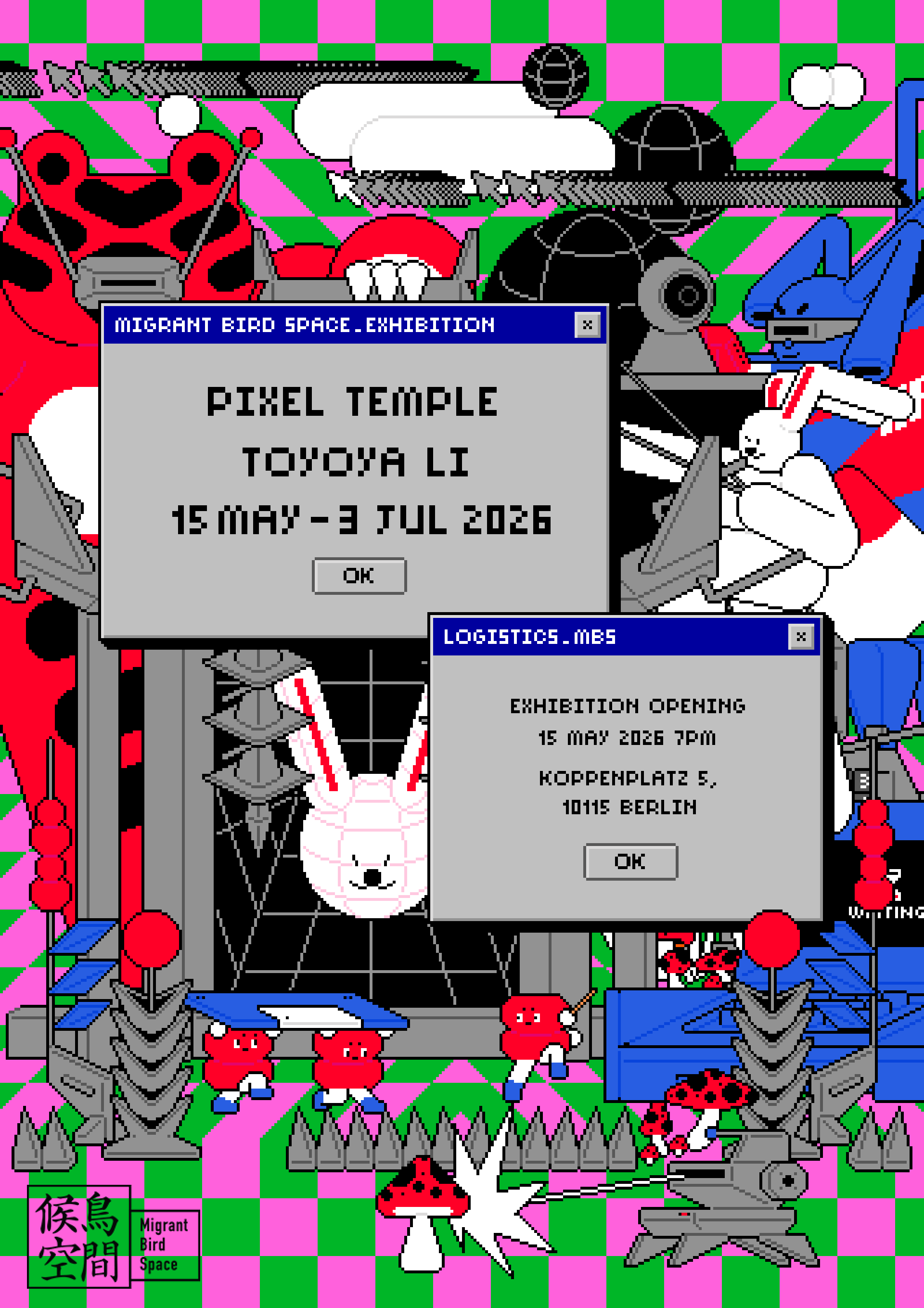
Pixel Temple is a multi-layered spatial structure constructed at the intersection of virtual memory and technical archaeology. In this solo exhibition, Toyaya Li (Li Fan) moves beyond simple visual nostalgia, engaging in a "re-materialization" of early digital culture. By deconstructing and reassembling the technical remnants of a bygone era—floppy disks, arcade cabinets, CD-ROMs, and fax machines, the artist transforms obsolete hardware into new mythological vessels, granting them a "living vitality" within a contemporary visual system.
At the heart of the exhibition is the concept of the pixel as an "energy unit." Toyaya Li creates a pulsating visual ecosystem inhabited by two iconic archetypes: Fútù (Fortune Rabbit) and Jīxióng (Machine Bear). They represent the two poles of the digital realm: Aspiration (Spirituality) and Algorithm (Mechanism). Their juxtaposition reveals the uncontrollable binary structure of our modern world: randomness versus control, emotion versus system, the player versus the platform.
Pixel Temple does not follow a linear narrative; instead, it generates a "Virtual Folklore System." Through repetition, stacking, and the use of lenticular "quasi-3D" visual strategies, the artist creates a sense of spatial displacement. The viewer is no longer a passive observer but is drawn into the data-rhythm of the work, becoming part of the system itself.
The exhibition ultimately points toward a visual philosophy of the "Loading State." The world is not defined by completion, but by the possibility of continuous operation. In this Pixel Temple Toyaya Li invites us to traverse the space between technical archaeology and future imagination, questioning how the relationship between the image, the medium, and the subject is rewritten when all things can be virtualized.